Most marketing asks for money first and results later, if at all. A print run, an ad budget, a sponsored post: you pay, then you find out whether it did anything.
The usual way
When you buy marketing upfront, you carry all the risk. The printer, the platform and the agency are paid whether or not anyone walks in. If it works, you are glad. If it does not, you have a lesson and a smaller budget.
That is not a criticism of the people selling it. Some of that marketing works very well, and some of it is good value even when the results are hard to see. It is simply a structure in which the business pays before it knows.
Paying per outcome
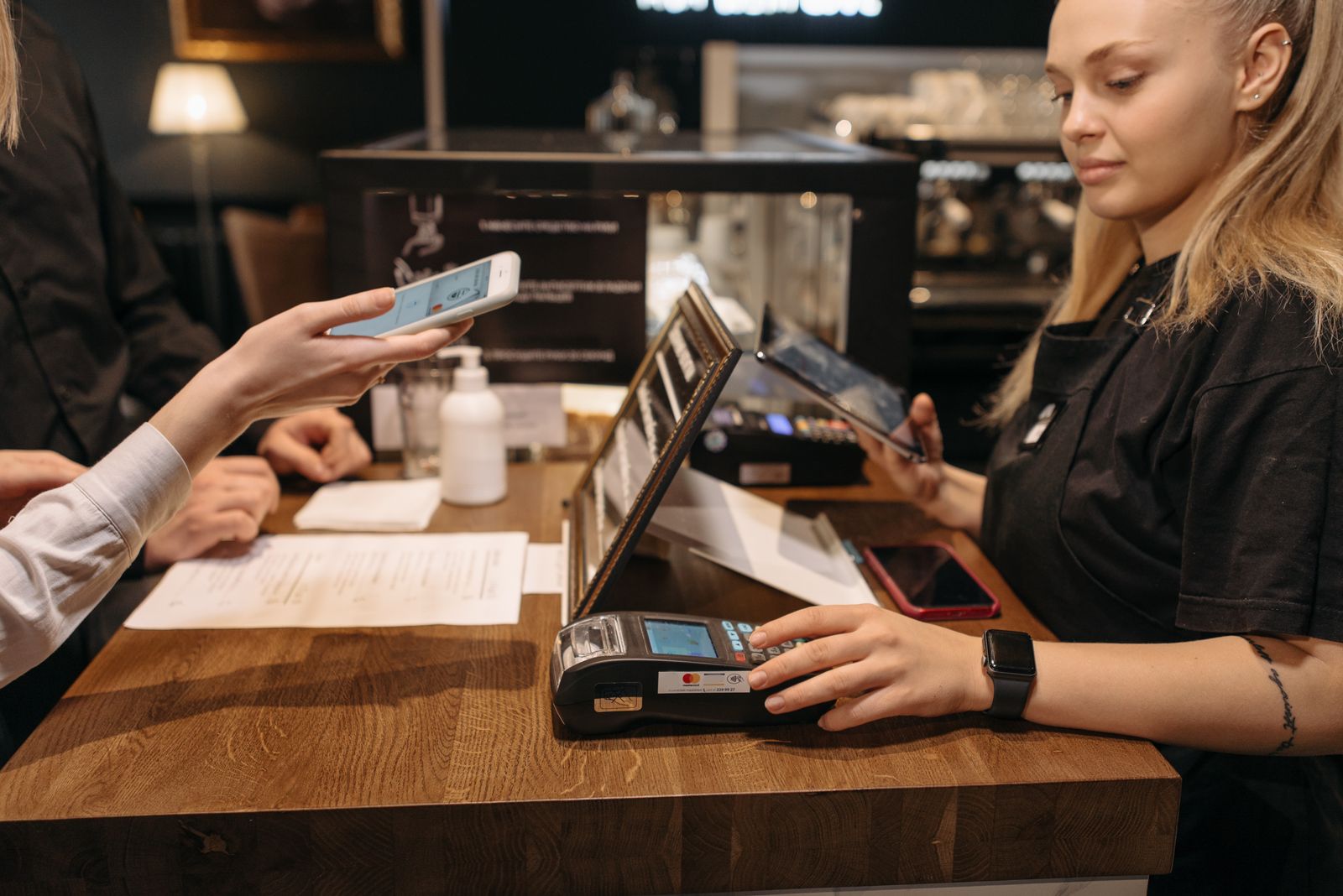
Paying per outcome flips that. With frndly, a business pays one flat fee per sale, after a friend buys and taps the chip at the counter. Nothing upfront, no subscription, no commission. If no one comes in through frndly, there is nothing to pay.
The result is that the charge arrives after the thing you wanted has already happened. You are not buying a chance of customers. You are paying for one that is already there.
What is good about it
The upside is plain. There is no budget to burn before anyone walks in, and every charge lines up with a real customer. For a small business, that makes marketing easier to plan and easier to stop if it is not working.
It also changes the conversation. Instead of asking whether an ad worked, you can look at a list of customers and ask whether each one was worth the fee. That is a much more concrete question, and most owners already have a good feel for the answer.
What is not so good about it
The limits are worth stating too. The cost is not zero: you pay for each sale, and you fund the Reward your customers earn. If it works well, the bill grows, which is a good problem but still a real one.
The fee is flat per sale, but it is not one number for every business. We set it according to the typical ticket size of your customers' sales, so a Spot with larger sales pays a different fee than one with smaller sales. That keeps the fee in proportion to what a sale is worth to you. It is still worth checking the fee against your own average sale and margin before you start, rather than after the first invoice.
It also only counts customers who come through frndly. It will not tell you about the rest of your business, and it is not a replacement for everything else you do to bring people in. A Spot with a poor product or slow service will not be rescued by it.
A simple test
So we suggest a simple test. Work out what a new customer is worth to you over time. That means what they spend on a first visit, and what they are likely to spend if they come back, which is the part that is easy to forget.
As an illustration only, imagine a new customer spends $20 on a first visit, and a share of them return a few times a year. If a flat fee per sale and a Reward you are comfortable with leave you ahead after a reasonable time, it is worth trying. If they do not, it is not the right fit, and we would rather you know that going in.
Questions to ask any provider
This is worth asking of any marketing, ours included. What exactly do I pay for? When do I pay? What happens if it does not work? How will I see the customers it brought? How easily can I stop?
A provider who answers those plainly is easier to trust than one who talks mostly about reach. Clear answers are a good sign. Vague ones usually mean the risk is mostly yours.
Who it suits
Marketing you pay for after it works will not suit every business. It tends to suit places where a new customer is clearly worth more than a single sale, where the owner wants to keep costs predictable, and where trust between neighbours already does a lot of the work. For the ones it suits, it takes a lot of guesswork out.